Smart Monitoring
Real-Time Sensors and Components
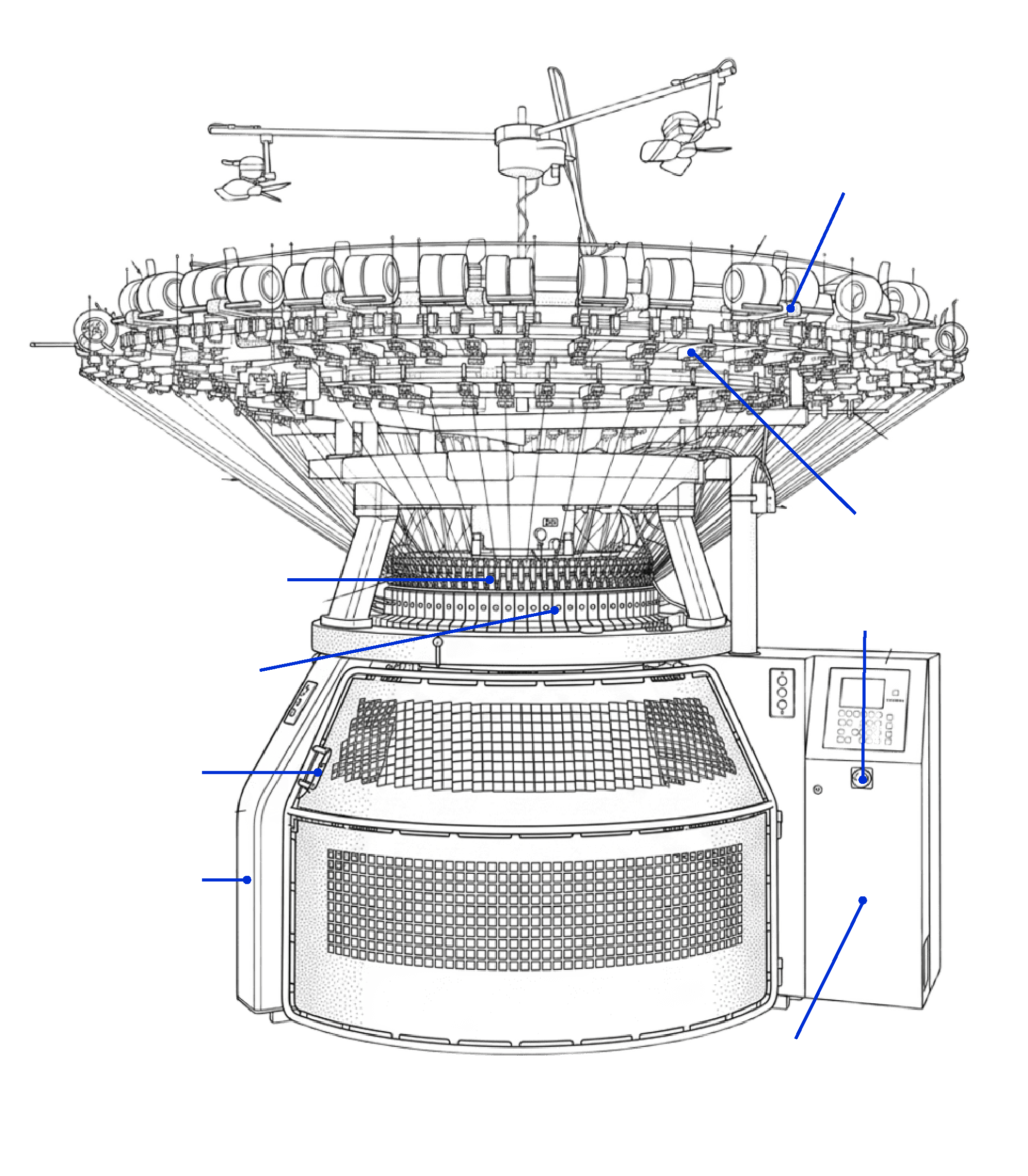
Yarn Break
Instant yarn-break detection at the feeder input or output.
Yarn Break
A widespread increase in yarn-break rates after changing suppliers may indicate critical raw-material quality issues. Breaks concentrated in a specific area or machine, on the other hand, generally indicate the need for corrective maintenance or cleaning. With WeaveUP Circular, the root cause can be quickly identified through yarn-break sensor readings and records, making all occurrences easy and fast to review.
Breakage or Deformation
Manufacturing defects, setup errors, worn cylinder components, or even insufficient lubrication can damage the needles and consequently affect machine performance. The answer comes from cross-analyzing the data collected by WeaveUP Circular.
Δ High T = Excessive friction
Identifying above-limit temperatures in the cylinder assembly can prevent premature wear, breakage, warping and wasted energy that lead to low efficiency.
Use This Button Responsibly
Emergencies can occur, and the seriousness of this action requires identification and traceability. WeaveUP helps your company with accurate records and reporting for each occurrence.
Unexpected Interventions
Opening an exit window during production significantly increases hourly costs. Control, records and reporting are essential for correcting operational failures and improving operational efficiency.
Level and Obstruction
High oil consumption may indicate incorrect settings, reservoir leaks or faults in the lubricator control electronics. Insufficient lubrication, on the other hand, severely compromises system efficiency, increasing energy consumption, cylinder wear and needle breakage.
Energy Consumption and Efficiency
Voltage spikes may indicate external faults, while current spikes may indicate internal machine problems. Use accurate data to trace defects, correct faults quickly and return to maximum operating efficiency.
Real-Time Data
Instantly knowing where, how and when production is taking place is a major advantage in negotiations with your customers!
Powerful competitive advantages:
• Fact-Based Negotiation: Instead of estimates, you provide reliable deadlines. This immediately builds customer confidence.
• Agility in Decision-Making: If a machine stops or a material is missing, you know immediately and can reallocate production.
• Shop-Floor Optimization: Knowing exactly when to start a new batch prevents idle time.
• Inventory Reduction (Just-in-Time): Producing what is needed at the right time frees up working capital.